Take your time with each position. Remember, it doesn't matter how far you can bend; what matters is that your body feels entirely supported, stable, and comfortable.
1. Mountain Pose (Tadasana)
Recommended Duration: Stand quietly for 1 to 2 minutes every morning.
How to Do It: Stand up tall with your feet placed slightly apart or touching together. Let your arms rest loosely at your sides with your palms facing forward. Softly close your eyes, distribute your body weight evenly across both soles, and imagine a thread pulling the crown of your head gently up toward the sky. Breathe deeply through your nose.
How it helps your body: This foundational pose fixes your postural balance, unlocks tight chest muscles, and grounds your nervous system, giving you a calm and steady focus to start your day.
2. Cat-Cow Stretch (Marjariasana-Bitilasana)
Recommended Duration: Move rhythmically back and forth for 10 full breaths.
How to Do It: Come down onto your hands and knees on your mat. As you breathe in, drop your belly down towards the floor, lift your chest up, and look forward softly (Cow). As you breathe out, press your palms into the floor, round your spine up toward the ceiling like an angry cat, and tuck your chin gently toward your chest (Cat).
How it helps your body: This movement gently massages your entire spine, releases stubborn knots in your upper back and neck, and improves circulation to your digestive organs.
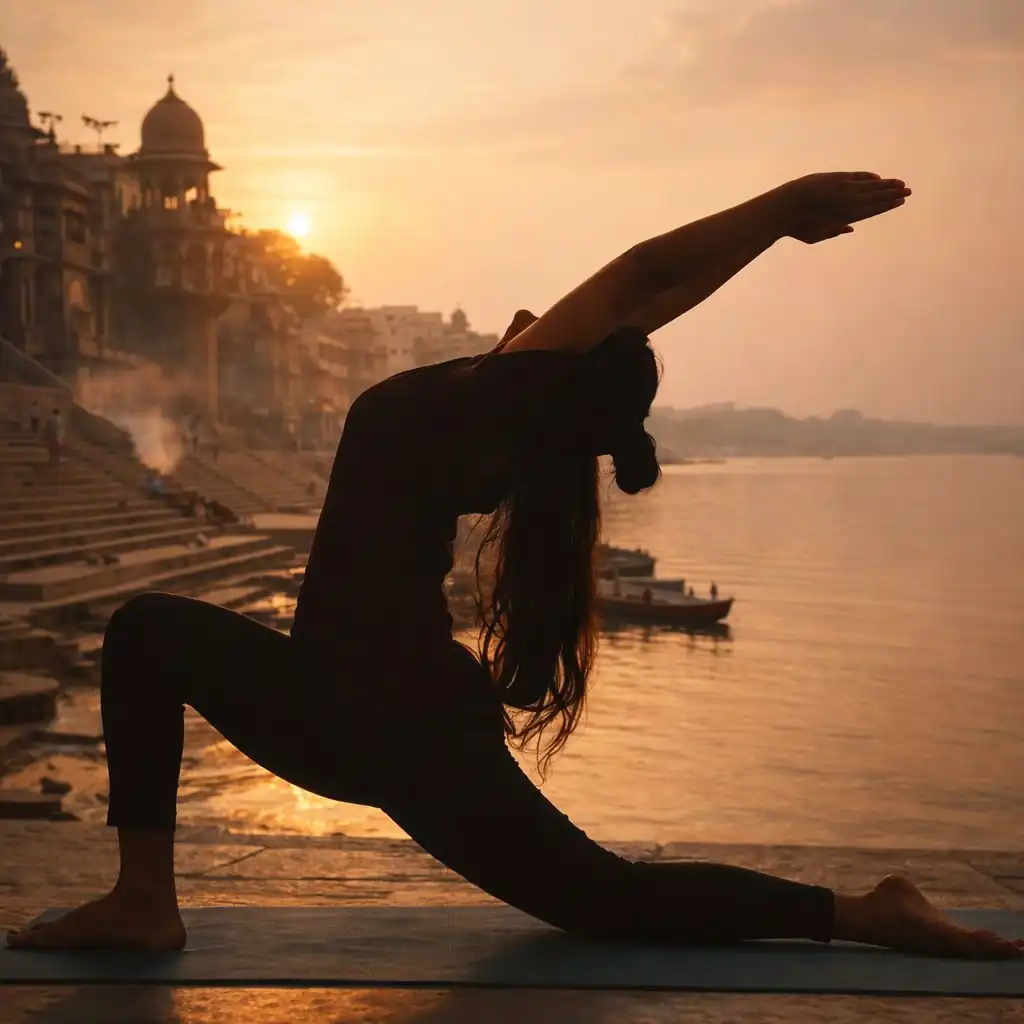
3. Downward Facing Dog (Adho Mukha Svanasana)
Recommended Duration: Hold comfortably for 5 to 8 slow breaths.
How to Do It: From your hands and knees, tuck your toes under, lift your knees off the ground, and push your hips high into the air. Extend your arms and legs so your physical frame forms an upside-down 'V' shape. Keep a very generous bend in your knees so your lower back feels zero strain, and let your head hang completely loose between your shoulders.
How it helps your body: This pose allows gravity to draw a fresh wave of blood and oxygen straight toward your brain and face. It elongates your spine, stretches your calves, and relieves built-up tension in the back of your legs.
4. Beginner's Tree Pose (Vrksasana)
Recommended Duration: Balance for 30 to 45 seconds on each side.
How to Do It: Stand tall in Mountain Pose. Shift your weight onto your left foot. Gently lift your right foot, bend the knee, and place the sole of your right foot against the inside of your left ankle, keeping your right toes touching the floor for balance. Bring your hands together in front of your chest. Fix your gaze on one unmoving spot in front of you.
How it helps your body: This basic balancing position strengthens your ankles and thighs, improves your mental concentration, and gently opens up tight hip joints without forcing them.
5. Thunderbolt Pose (Vajrasana)
Recommended Duration: Sit comfortably for 5 minutes immediately after your main meals.
How to Do It: Kneel down on both knees. Bring your big toes together behind your back so they touch, and open your heels out wide to the left and right sides. Lower your hips down comfortably so your seat rests directly in the space between your heels. Keep your spine perfectly straight, open your chest, and lay your palms flat on your thighs. Look forward and breathe naturally.
How it helps your body: Kneeling in Vajrasana reduces blood flow to your legs and redirects it straight into your digestive system. This boosts your digestive fire, stops heavy bloating or gas, and prevents post-meal sleepiness.
6. Bound Angle Pose / Cobbler's Pose (Baddha Konasana)
Recommended Duration: Hold gently for 2 to 3 minutes while breathing smoothly.
How to Do It: Sit up straight on your floor or blanket. Bend your knees and bring the bottoms of your feet together so they touch, letting your knees drop open to the left and right sides. Slide two thick cushions or rolled blankets directly underneath your outer knees so your groin doesn't feel any pulling or straining text. Hold onto your ankles softly.
How it helps your body: This gentle hip-opener removes physical stiffness from your inner thighs, improves blood circulation to the reproductive organs, and relaxes a tight pelvic floor.
7. Supported Child's Pose (Balasana)
Recommended Duration: Rest here for 3 to 5 minutes whenever you feel tired.
How to Do It: Kneel down on your knees, widen them slightly apart, and sit your hips back onto your feet. Fold your upper body forward over your thighs until your forehead rests flat on your mat or on a soft pillow. Extend your arms out long in front of you, or let them rest back by your feet with your palms facing up.
How it helps your body: This beautiful resting position works like a soothing balm for a racing mind. It stretches your lower back, gently decompresses your spinal discs, and signals your nervous system to move into a deep state of restoration.
8. Supported Reclined Butterfly Pose (Supta Baddha Konasana)
Recommended Duration: Spend 10 to 12 minutes here every night right before sleep.
How to Do It: Lie down completely flat on your back on your bed or soft mat. Touch the bottoms of your feet together, and let your knees gently drop open wide to the left and right sides. Place thick pillows directly under your outer thighs and knees so you feel zero pull or stretching strain. Rest your palms flat over your lower stomach, close your eyes softly, and let your entire body become heavy.
How it helps your body: This passive hold completely unloads weight from your pelvic floor and lower core muscles. It turns down high-stress signals coming from your adrenal glands, releases fluid stagnation in your lower core, and helps you drift into deep sleep.
9. Supported Legs-Up-The-Wall Posture (Viparita Karani)
Recommended Duration: Rest here for 10 minutes at the end of a long day.
How to Do It: Place a soft blanket right up against an unblocked wall. Sit sideways with one hip touching the wall, and in one smooth motion, swing your legs straight up against the wall while lowering your back flat onto the floor. Slide a soft pillow under your lower back and hips to keep them slightly lifted. Let your arms relax out to the sides with your palms facing up, and completely relax your thigh muscles.
How it helps your body: This posture reverses the regular pull of gravity on your lower limbs. It helps stagnant fluids drain back toward your central circulation, reduces heavy swelling or bloating in your legs and lower abdomen, and tells your brain to move into a state of deep cellular recovery.
10. Corpse Pose (Savasana)
Recommended Duration: Lie quietly for 5 to 10 minutes at the very end of your daily sequence.
How to Do It: Lie completely flat on your back on your mat or bed. Separate your legs slightly and let your feet drop open naturally to the sides. Place your arms a few inches away from your body with your palms facing the ceiling. Softly close your eyes, take a deep breath in through your nose, exhale fully through your mouth, and allow every single muscle in your body to go completely loose like a ragdoll.
How it helps your body: This is where the real magic happens. Savasana allows your body to integrate all the benefits of your practice, drops your blood pressure to a peaceful baseline, and provides your mind with absolute, un-interrupted rest.