Deconstructing the Science: Aging vs. True Biological Mobility
To understand how to help your body feel young again, we must look at what happens beneath the surface as the years pass. Medical science now understands that physical decline is not inevitable. By tackling the biological root causes of stiffness, we can change how our bodies age.
| Physical Factor |
What Happens Without Targeted Movement |
The Real Solution via Gentle Flow |
| Synovial Joint Fluid |
The natural fluid in your joint spaces dries up, causing bones to rub together painfully. |
Gentle, circular movements act like a pump to bring back this protective "joint juice." |
| Muscle Mass (Sarcopenia) |
Muscles naturally lose tone and size, making simple chores feel exhausting. |
Safe, steady structural holds maintain functional muscle tissue without straining the heart. |
| Nerve Coordination |
The link between your brain and feet slows down, leading to dangerous stumbles. |
Mindful weight-shifting exercises retrain your nervous pathways to spot and correct balance changes. |
The old idea that seniors should avoid movement to stay safe caused a lot of unnecessary weakness. When your joints feel locked or painful, it is usually not because they are broken. It is because they lack regular circulation. By practicing a specialized, prop-assisted "Gentle Flow," we target the Neuro-Endocrine-Immune (NEI) axis to lower systemic inflammation. This ensures your body stays flexible, your bones stay protected, and your mind stays free from the constant fear of falling.
The Common Warning Signs: Signals of a Stiffening Framework
When your body starts losing its natural mobility, the warning signs are not always dramatic. They show up slowly across your daily habits. Depending on your personal routine and health history, these symptoms generally fall into three major areas:
-
1
Early Morning Stiffness: Feeling tight, sore, or heavy when waking up, taking several minutes just to stretch your legs comfortably, or noticing that your knees ache when steps are involved.
-
2
Loss of Balance and Spatial Awareness: Finding yourself feeling dizzy during sudden head turns, catching your toes on carpets, or needing to hold onto walls and furniture while walking across a room.
-
3
Disrupted Sleep and Nervous Anxiety: Feeling an inner restlessness in your limbs at night (often tied to Ayurvedic 'Vata' imbalances), experiencing erratic blood pressure spikes, or finding it hard to fall asleep due to constant joint discomfort.
An Interesting Biological Fact
Did you know that your body's ability to balance depends heavily on tiny sensors inside your ankles and feet? These sensors are called proprioceptors. As we spend more time sitting or wearing rigid footwear, these sensors go to sleep. When a senior experiences a slip or a change in walking surfaces, sleeping proprioceptors fail to warn the brain in time, resulting in a fall. This biological reality proves that fall prevention is not about building big, bulky muscles; it is about keeping your sensory nervous system awake, reactive, and highly tuned through deliberate, slow-motion balance training.
The Long-Term Implications: Why Maintaining Movement is Critical
Treating stiffness as just an inconvenient part of aging can open the door to serious long-term health risks. When you move less because it hurts, your vascular walls stiffen, your metabolic rate drops, and your balance deteriorates further. This spiral can lead to several major issues:
-
1
Cardiovascular and Metabolic Decline: Low physical activity slows down how your body manages sugar and blood pressure. This increases the risks of managing Type 2 diabetes, poor circulation, and sluggish lymphatic drainage.
-
2
Chronic Joint Degeneration: Joints that are left completely stationary lose their remaining cartilage cover. This causes chronic arthritic flare-ups, localized swelling, and severe structural limitations over time.
-
3
Elevated Vagal Stress & Insomnia: A locked, tense framework keeps your sympathetic nervous system trapped in a state of high alarm. This suppresses your natural vagal tone, causing high anxiety and fragmented sleep patterns.
How Therapeutic Yoga Overcomes the Physical Freeze
When a senior is trying to regain mobility, jumping into intense cardio routines, aggressive bouncing stretches, or heavy weight training can backfire. The body sees these sudden movements as a threat, causing muscles to lock up defensively, increasing joint friction, and elevating heart rate variations to unsafe levels.
Clinical yoga provides a safe, intelligent way out of this physical standstill. By utilizing gentle, supported postures alongside slow, rhythmic breathing, we show your nervous system that it is safe to loosen up. This somatic shift widens compressed joint spaces, triggers the release of lubricating synovial fluid, and coaxes tight muscle bundles into an easy, flexible state without putting any jerky mechanical stress on your heart or skeletal frame.
My Specialized Technique: Neuro-Vascular Somatic Calibration
During my clinical work at Sir Sunderlal Hospital (BHU), I developed a highly specialized approach for geriatric recovery called Neuro-Vascular Somatic Calibration. Instead of asking seniors to follow generic, rapid workout flows, this system uses gentle, targeted alignment adjustments to relax the nervous system and clear blocked circulation channels.
Our protocol focuses on using simple, accessible household items like sturdy chairs, thick cushions, and walls to remove the strain of gravity from your poses. When your body feels fully supported and secure, your brain immediately turns off its defensive stress responses. This opens up constricted pathways, delivering warm, oxygen-rich blood directly to your deep joints and spinal column, erasing years of stiffness, and restoring your natural physical balance.
The Complete, Detailed Guide to Your Daily Senior Mobility Asanas
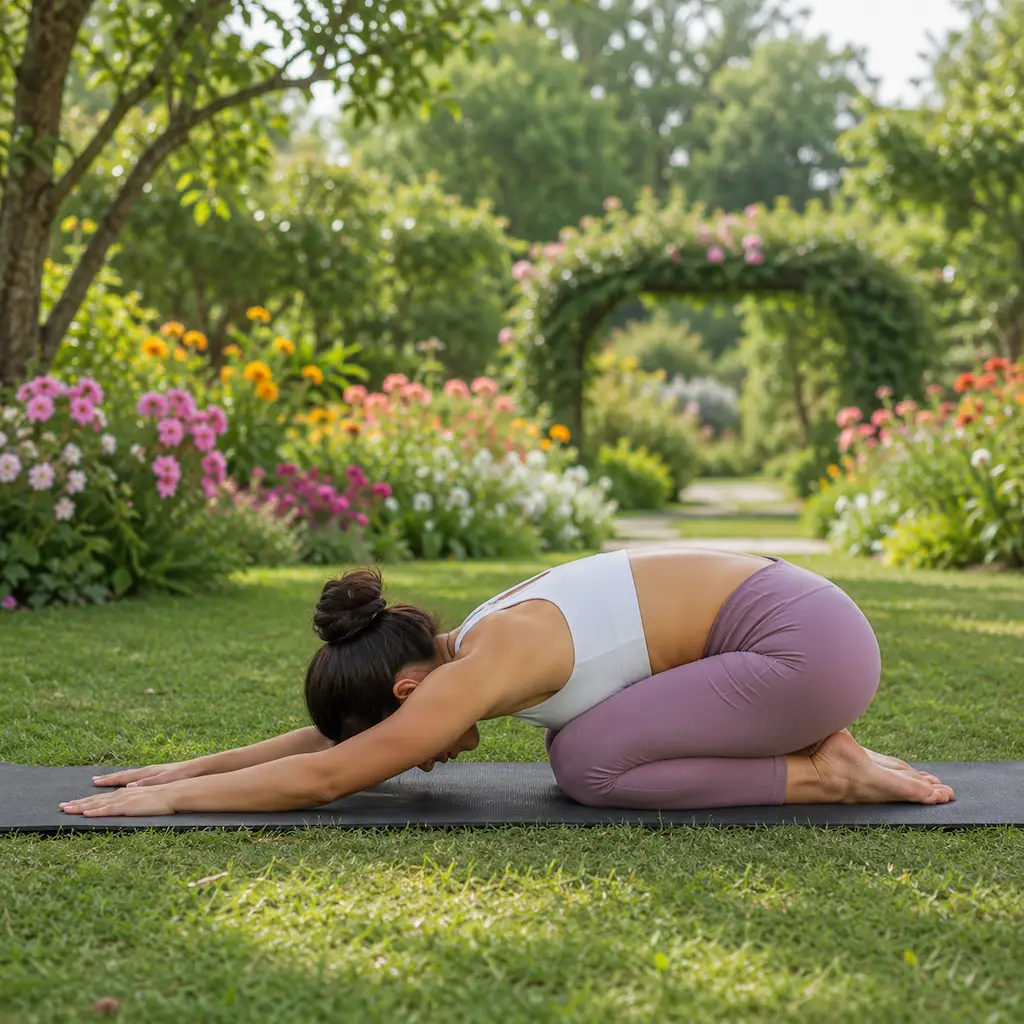
1. Supported Wide-Knee Extended Child’s Pose (Sukhasana Balasana)
Time to Hold: 5 to 8 minutes every afternoon or whenever your lower back feels tired.
Step-by-Step Instructions: Find a comfortable, cushioned spot on your rug or yoga mat. Move slowly onto your hands and knees. Separate your knees out comfortably wide toward the edges of your mat, and let your big toes touch together behind you. Slide a large, thick bed pillow or a firmly rolled blanket lengthwise directly between your thighs. Gently lower your hips down toward your heels while relaxing your belly, chest, and one side of your face flat down onto the support. Stretch your arms out long in front of you, keeping your palms flat on the floor. Close your eyes, breathe into your lower back, and switch sides with your head halfway through.
How it helps your body: This passive position decompresses a compressed lumbar spine and relaxes tight gluteal muscles. It gently stretches stiff hip joints without forcing them to bear your body weight, while lowering stress hormones by placing your head lower than your heart.
2. Cooling Left-Nostril Pranayama (Chandra Bhedana Pranayama)
Time to Practice: 5 minutes every evening to soothe the nervous system before bedtime.
Step-by-Step Instructions: Sit comfortably up tall in a sturdy chair or cross-legged on your bed with a supportive pillow behind your lower back. Relax your shoulders down away from your ears. Rest your left hand open on your lap, and bring your right hand close to your nose. Close your eyes gently. Use your right thumb to lightly seal your right nostril shut. Inhale slowly and quietly through your open left nostril for a silent count of 4 seconds. Then, release your thumb, use your ring finger to gently close your left nostril, and exhale smoothly out through your right nostril for a count of 6 seconds. Repeat this steady pattern: always breathing in through the left, and out through the right.
Why it works: This precise breathing technique acts as a direct toggle for your vagus nerve. It helps stimulate vagal tone, lowers elevated heart rate variability, eases nervous anxiety, and counteracts the dry, restless 'Vata' qualities that disrupt sleep and cause night-time muscle tension.
3. Chair-Assisted Joint Juice Warmup (Sukshma Vyayama)
Time to Practice: 10 minutes every morning before breakfast to clear waking stiffness.
Step-by-Step Instructions: Sit firmly on a stable chair with your feet resting flat on the ground. Hold the sides of the seat for balance. Lift your right foot a few inches off the floor and slowly trace wide circles with your big toe in the air—5 times clockwise, then 5 times counter-clockwise. Lower your foot and repeat this rotation with your left ankle. Next, extend both arms straight out in front of you at shoulder height. Open your fingers as wide as possible, then close them tightly into fists. Repeat this opening and closing 10 times. Finally, place your fingertips on your shoulders and roll your elbows in large, smooth circles 5 times forward and 5 times backward.
Why it works: These isolated micro-movements are specifically designed to pump fresh synovial fluid directly into your extremities without requiring heavy muscle exertion. It clears away morning arthritic pain, increases local blood flow, and builds immediate confidence in your movement.
4. Wall-Supported Elevation Posture (Modified Viparita Karani)
Time to Hold: 8 to 10 minutes every evening to relieve tired, heavy legs.
Step-by-Step Instructions: Place your yoga mat or a soft, folded blanket right up next to a clear section of a wall. Sit down sideways with your right hip pressed flush against the base of the wall. In one smooth, careful movement, lower your shoulders and head down flat onto the floor while swinging both legs straight up the wall. Your torso will now be flat on the ground with your legs resting vertically up against the wall. If your hamstrings feel tight, simply slide your hips back a few inches away from the wall. Place a flat pillow under your head for neck comfort. Relax your arms wide to the sides, turn your palms up, and let your legs rest weightless against the wall.
Why it works: Elevating your legs reverses the pull of gravity on your lower veins. It promotes the smooth return of stagnant blood and lymphatic fluids back up to your heart, dramatically reduces swelling in your ankles, and lowers blood pressure variations to trigger deep cellular recovery.
Why Professional Somatic Guidance Restores Lasting Health
Living with stiff knees, a tight back, or a constant fear of losing your balance is not something you are forced to just accept as you get older. These daily frustrations are simply clear messages that your joints and nerves are working under a heavy load of structural compression and lack of movement.
Our clinical senior wellness programs at onlineyogaclass.in show you how to safely restore your body's natural alignment without risking injury. Corporate leaders like GAIL (India) Limited rely on our specialized techniques to keep their senior teams energetic and pain-free. By combining gentle, prop-supported movements with simple breathing tools, we ensure your joints stay open, your balance remains rock-solid, and you can enjoy your life with total independence and confidence.

About Shringarika Mishra
Gold Medalist (University of Patanjali) & NET JRF (AIR 2). Research Scholar at Banaras Hindu University (BHU) specializing in Clinical Yoga and Geriatric Somatic Restructuring. With over 11 years of experience and 16 published research papers, she provides evidence-based biological healing through onlineyogaclass.in.
Medical Disclaimer: The clinical observations and lifestyle protocols shared in this article are intended entirely for general educational and health-awareness purposes, drawing on physiological systems analyzed at my clinical research at BHU. This content cannot replace professional medical diagnosis, specialized orthopedic evaluation, or medical cardiac oversight. If you experience unexpected extreme pain, sudden severe dizziness, or joint instability, please consult a medical physician immediately.