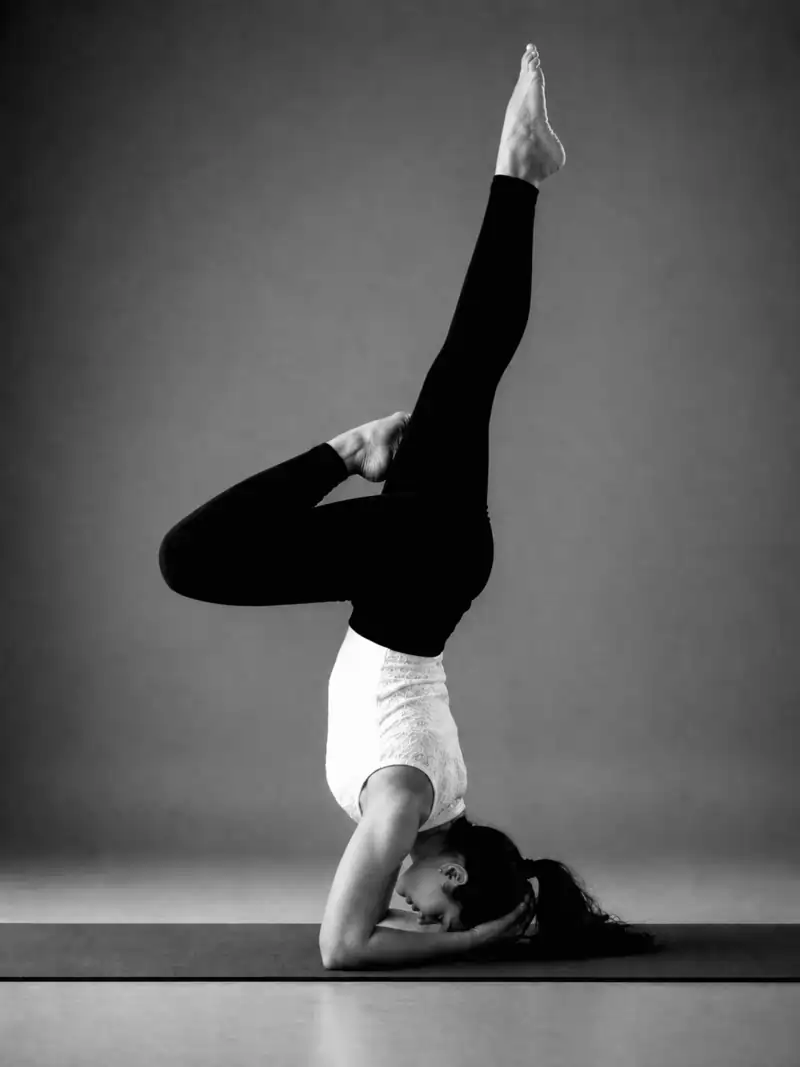
Many yoga lovers find it hard to understand body mechanics, especially when fast fitness trends change the way traditional poses are taught. For a very long time, yoga has been celebrated for its beautiful shapes and incredible healing potential. However, when people practice without understanding how their bones match up, it can easily lead to repetitive muscle strain, joint irritation, and sudden musculoskeletal trauma.
During my clinical research at BHU, I spent years studying how the human body processes physical strain, protects its nerves, and distributes weight across the bones. One major thing I discovered is that a joint injury or a sore back is almost never just a random accident. When your body starts to ache after a class, or when a sudden sharp pinch happens during a stretch, your body is actually reacting to deeper alignment mistakes. These errors usually involve how your body balances weight over your knees, how much pressure builds up in your lower spine, and how well you activate the supportive muscles around your delicate joints. This article will explain what safe alignment means in very simple, easy language, how bad movement patterns affect your long-term health, and give you a detailed, step-by-step guide to help your body practice safely without pain.
Deconstructing the Terms: Aesthetic Perfection vs. Force Distribution vs. The NMS Axis
To understand how to keep your body feeling great during your practice, we must understand why clinical experts view movement differently than typical gym trainers. These updates are actually good news because they show that science now understands the true root cause of yoga injuries.
| Movement Term |
What People Used to Think |
The Clinical Reality and Benefit |
| Aesthetic Perfection |
They thought making the body match an exact picture or looking highly flexible was the ultimate goal of yoga. |
It made people twist their bones into unnatural shapes, ignoring their unique bone structure and causing pain. |
| Force Distribution |
They realized that balancing weight evenly across the entire skeletal frame keeps the body upright. |
It protects delicate tissues by ensuring the heavy workload is carried safely by strong bones instead of soft ligaments. |
| The Neuro-Muscular-Skeletal (NMS) Axis |
It treats the whole body as a connected line where nerves, muscles, and bones shield each other. |
This modern viewpoint acts as a biological shield, keeping the pathways of your spine safe from pressure. |
The old way of focusing purely on making flexible shapes caused a lot of unnecessary injury. When you look at an advanced posture, the goal should not be to bend as deeply as possible at any cost. True health comes from joint stacking—arranging your joints, like placing your knee directly above your ankle, so that your heavy skeletal frame carries the weight. If you ignore these natural curves or collapse into your lower back during deep backbends, you risk serious disc compression. By changing our focus to the NMS axis, clinical science shows that your movement safety is directly controlled by how evenly you distribute weight and how well you safeguard your nerve pathways.
The Common Injuries: Signals of a Broken Alignment Line
Because bad alignment alters your internal mechanical balance and puts extra load on your connective tissue, injury warning signs can show up all over your frame. Based on our long-term clinical work and evaluations at Sir Sunderlal Hospital (BHU), these trouble zones usually fall into three major categories:
-
1
The Lumbar Spine Strains: This includes experiencing a dull ache or sharp pinch in your lower back, which is frequently caused by rounding your spine during forward bends rather than cleanly hinging from your hip joints.
-
2
The Sacroiliac (SI) Joint Irritation: This involves deep pain at the base of your waistline, which is commonly triggered by stretching too far in uneven, asymmetrical poses without keeping your pelvis stable and firm.
-
3
The Wrist Complex Aches: This shows up as sharp pressure or soreness in your wrists during weight-bearing shapes like Downward Facing Dog, occurring when body weight is not spread evenly out into your fingertips.
An Interesting Biological Fact
Did you know that the exact same mechanical rules that protect advanced athletes also apply to everyday yoga practitioners? When any person goes through life with high physical tension combined with improper posture habits, their body experiences a similar breakdown. This misalignment alters their core physical frame, causing them to wear down joint cartilage quickly, experience early wear and tear across the lower back, and feel a drop in daily physical stamina. This biological reality proves that how your body handles force distribution and structural balance determines how healthy your movement framework will be, regardless of your current flexibility level.
The Long-Term Implications: Why You Must Take Action
Ignoring bad alignment habits or treating joint discomfort as a simple phase that will go away on its own can lead to much more serious bone and joint challenges as you grow older. When your body creates uneven pressure because your joints are unstacked, that extra load forces your ligaments to stretch too much and rub together. If this negative pattern goes unmanaged for years, it can lead to several long-term health risks:
-
1
Chronic Inflammation and Joint Risks: Your body can find it harder and harder to repair its soft tissues, which increases the likelihood of dealing with chronic joint inflammation, premature arthritis, fluid retention in the joints, and constant muscle knots over time.
-
2
Nerve Compression Challenges: Because the spine is repeatedly allowed to collapse or twist incorrectly, finding a pain-free range of motion can become complicated, sometimes leading to severe sciatica pain or slipped discs that disrupt daily life.
-
3
Nervous System Stress Burnout: Living with constant, lingering physical pain triggers continuous surges of a stress hormone called cortisol. High cortisol acts like a healing brake in your brain, locking your body in a fight-or-flight state and slowing down muscle and tissue repair.
How Yoga Overcomes the Internal Freeze
When your body is dealing with joint strain or muscle exhaustion, pushing yourself through extreme, hot yoga sessions, aggressive over-stretching, or forcing your limbs into painful shapes can actually make things worse. Your body interprets these harsh activities as a sign of physical danger, causing your stress hormones to spike even higher, which locks your lower back in a tight, protective grip and increases cellular inflammation.
Clinical yoga helps you step away from this internal emergency. By using soft, deliberate prop-assisted positions combined with slow, steady breathing, we teach your nervous system that it is safe to let go of its defensive grip. This shift opens up tight blood vessels around your spine, helps your muscles engage without strain, and encourages your joint fluids to return to an even, healthy flow without putting any harsh mechanical pressure on your body.
My Specialized Technique: Neuro-Vascular Somatic Calibration
During my clinical research at BHU, I developed a unique method designed specifically for structural safety and joint recovery, which I call Neuro-Vascular Somatic Calibration. This technique moves away from generic, fast-paced exercise flows, focusing instead on how gentle structural positions affect your internal nervous system and muscle stability.
Our method relies on using soft supports like thick blocks, yoga straps, and wall alignment to hold your body in stable positions. When your muscles do not have to strain excessively to hold a pose, your brain drops its stress response immediately. This tells your internal pathways to open up, allowing fresh blood to flow directly into your joints, clearing out inflammation and restoring your natural health rhythms.
The Complete, Detailed Guide to Your Daily Healing Asanas
1. The Clinical 4-Point Check Sequence
Time to Practice: Perform this quick check for 3 to 5 minutes before entering any weight-bearing posture.
Step-by-Step Instructions: Stand or place yourself firmly on your mat. First, root downward mindfully through the four individual corners of both feet. Second, gently engage your lower core muscles to create a supportive belt for your lumbar spine. Third, soften your knee and elbow joints slightly to avoid dangerous hyperextension. Fourth, synchronize your entire movement with a slow, controlled, and rhythmic Ujjayi breath. Keep your eyes soft and maintain this awareness.
How it helps your body: This foundational sequence stops joint injuries before they can even start. It shifts the heavy physical load off your delicate ligaments and places it onto your strong bones, ensuring that your nervous system pathway remains wide open and protected.
2. Prop-Assisted Spinal Protection Fold
Time to Practice: Hold this variation for 5 to 7 minutes during your evening wind-down routine.
Step-by-Step Instructions: Stand tall with your feet placed hip-distance apart. Place two thick yoga blocks flat on the floor right in front of your toes. Instead of bending forward by rounding your upper back, place your hands on your hips and hinge directly from your hip joints. Keep your knees slightly bent. Lower your torso down until your hands rest firmly flat on top of the blocks. Adjust the block height so that your spine remains perfectly straight and long, like a tabletop. Let the back of your neck stay relaxed.
Why it works: Using blocks serves as a clinical tool to bring the floor closer to you, allowing your tight hamstring muscles to relax without straining your delicate spinal connective tissues. It completely eliminates lumbar disc compression.
3. Isometric Joint Stabilization Pose
Time to Hold: Maintain this quiet muscular engagement for 2 to 3 minutes per side after warm-ups.
Step-by-Step Instructions: Stand next to a solid wall. Step your right foot forward and bend your right knee slightly, keeping it stacked directly over your ankle. Press the outer side of your right thigh lightly against the wall. Without actually moving your leg or shifting your pelvis, consciously tighten and activate the muscles around your right hip and knee as if you are trying to push the wall away. Keep your upper body tall, your core engaged, and breathe deeply. Repeat this same process on your left side.
Why it works: By activating the deep muscles surrounding a joint without moving the joint itself, this isometric approach builds lasting stability. It reduces local tissue friction, calms down joint inflammation, and strengthens your movement foundation.
4. Vagal Tone Balancing Bridge Pose
Time to Hold: Stay in this restorative bridge variation for 8 to 10 minutes at the end of your practice.
Step-by-Step Instructions: Lie down flat on your back on a soft mat. Bend both knees and place your feet flat on the floor, keeping them hip-width apart and close to your seat. Press down into your feet and lift your hips up just a few inches. Slide a firm yoga block or a thick bolster directly underneath your sacrum (the hard bone at the very base of your lower back) for support. Let your hips rest completely heavy onto the block. Extend your arms out to the sides, close your eyes, and focus on breathing out slower than you breathe in.
Why it works: This gentle inversion stimulates your vagal nerve pathways to calm down your mind and body. It signals your brain to lower circulating stress chemicals, which creates the perfect cellular environment for rapid joint and tissue repair.
Why Professional Somatic Guidance Restores Lasting Health
Dealing with continuous knee pinches, a sore lower back, stiff wrists, or constant hip clicking is not a personal failure that you simply have to tolerate or live with. These frustrating changes are clear signs that your internal movement systems are working under an uneven, dangerous load.
Our specialized biomechanical and joint safety programs at onlineyogaclass.in teach you how to listen to your body's true structural feedback and resolve movement errors safely. Because every human skeleton is unique—with different hip bone shapes and spinal flexibilities—a simple one-size-fits-all approach to exercise can be dangerous. By combining precise functional anatomy habits with evidence-based adjustments, you avoid pushing your body into chronic injury, ensuring your joints stay fully open, leaving you feeling light, strong, and completely pain-free.

About Shringarika Mishra
Gold Medalist (University of Patanjali) & NET JRF (AIR 2). Research Scholar at Banaras Hindu University (BHU) specializing in Clinical Yoga and Biomechanical Safety. With over 11 years of clinical experience and 16 published research papers, she provides evidence-based anatomical corrections through onlineyogaclass.in.
Medical Disclaimer: The clinical observations and structural protocols shared in this article are intended entirely for general educational and health-awareness purposes, drawing on physiological systems analyzed at my clinical research at BHU. This content cannot replace professional medical diagnosis, specialized orthopedic screening, or physical therapy oversight. If you experience unexpected severe joint swelling, sharp radiating nerve pain, or severe back spasms, please consult a medical physician immediately.