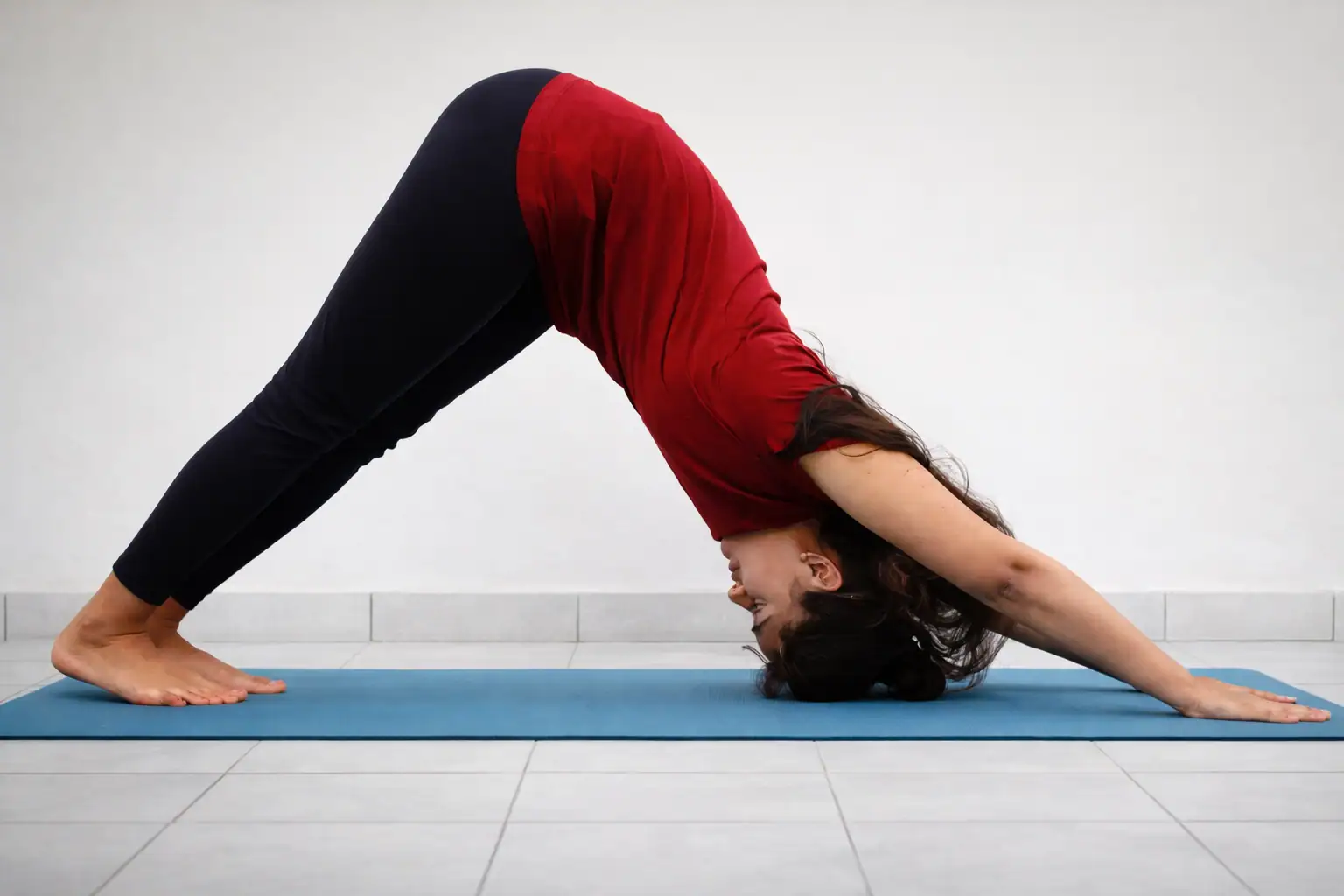
You wake up in the morning, look in the bathroom mirror, and feel a familiar wave of frustration. You notice a few new stubborn, coarse dark hairs along your jawline or chin. You try to cover them up, head to the gym, and spend forty-five exhausting minutes pushing your body through a sweaty High-Intensity Interval Training (HIIT) session. You run until your chest burns, leap onto boxes, and track every calorie on your watch, believing this hard work is the key to fixing your body. Yet, despite your immense dedication, the scale refuses to budge. Your lower belly feels constantly bloated and hard, your facial hair seems to grow back faster, and you feel completely wiped out for the rest of the day. If this sounds exactly like what you are experiencing, please know that you are not broken, lazy, or doing anything wrong. You have simply fallen into a hidden biological trap where standard gym advice collides destructively with your hormonal design.
During my clinical research years at the Institute of Medical Sciences, Banaras Hindu University (BHU), I have dedicated my career to analyzing how the deep neuro-endocrine structures of the female body respond to physical strain and mechanical exhaustion. One major gap I discovered in modern fitness coaching is that forcing standard, high-impact exercise routines on a sensitive or overloaded core acts like an unyielding stress trigger inside an already congested system. A systemic condition like Polycystic Ovary Syndrome (PCOS) or the modern metabolic profile known as PMOS is almost never just a simple weight or fat problem alone. When your adrenal axis becomes over-activated, your entire reproductive framework reacts to deeper internal survival cues. This comprehensive guide will deconstruct these complex biological mechanics in plain language, explain why aggressive cardio tracking introduces unwanted friction into your recovery pathways, and offer a specialized, daily clinical yoga blueprint to bring down your circulating stress hormones and return your body to a state of absolute, functional harmony.
FREE SERVICE
Get Your Free Medical Report Analysis
Stop guessing your recovery path. Click the button below to text our clinical team directly on WhatsApp. Attach your latest pelvic ultrasound scans, cortisol tracking summaries, or metabolic lab reports, and get a private, 15-minute clinical evaluation directly from BHU Research Scholar Shringarika Mishra.
UPLOAD YOUR MEDICAL REPORTS NOW
The Clinical Gap: Why Common Gym Solutions Fail You
The standard guidance most women receive for weight management is incredibly simplistic: track your calories, eat less food, and exercise harder. When these general fitness rules are applied to a delicate endocrine condition like PCOS or the modern metabolic profile known as PMOS, they frequently cause significant harm. True physical preparation requires absolute structural balance, allowing your deep pelvic and abdominal systems to rest without pain or localized friction.
| Exercise Routine State |
What High-Impact Gym Workouts Do to the Axis |
The Real Problem with This Routine |
| High-Impact Exhaustion (HIIT / Aggressive Circuits) |
Forces an already loaded, sensitive hormonal framework into extreme physical survival loops. |
Spikes circulating cortisol levels, signals a continuous external emergency, and halts reproductive function. |
| The Fat-Storage Freeze |
Commands the tissues to save visceral fat pools around your lower stomach and liver to guard against danger. |
Locks the pelvic basin in a tight grip, keeping baseline inflammation high and blocking core recovery. |
| Elastic Somatic Calm (Clinical Yoga) |
Prioritizes deep space creation, slow nasal respiration frequencies, and complete core un-guarding. |
No issues. Lowers adrenal stress outputs, balances blood sugar shifts, and helps open core blood paths naturally. |
Generic gym workouts are designed for individuals with a completely balanced, neutral baseline metabolism. Pushing an already sensitive hormonal framework through intense, exhausting interval circuits places an immense mechanical burden on your internal organs. It forces your body to run on empty survival energy. When you rely solely on willpower to complete high-impact cardio loops while restricting your food intake, you are not burning fat safely; you are actively triggering an internal emergency response that shuts down your normal reproductive pathways. Shifting to gentle, breath-led somatic release choices clears these hidden blocks, teaching your brain that it is fully safe to soften and regulate its hormone outputs naturally.
The Science Lesson: Cortisol, Insulin, and the Facial Hair Loop
Let us break down exactly how your body works using simple words. Your system has two main control centers for handling daily challenges: your metabolism, which manages your blood sugar via insulin, and your adrenal glands, which manage stress by releasing a hormone called cortisol. When you jump, sprint, and gasp for air during a standard HIIT session, your brain cannot tell the difference between a trendy gym workout and running away from a dangerous predator. It senses an extreme physical emergency. To save your life, your adrenal glands immediately flood your bloodstream with massive amounts of cortisol.
In a healthy body, this cortisol level drops quickly after exercise. But in a body managing PCOS or metabolic variants, your cells are already resistant to insulin, meaning they struggle to process sugar from food properly, leaving them starved for energy. This combination of high insulin and a sudden explosion of cortisol creates a dangerous chemical chain reaction. High cortisol levels act like an amplifier inside your body, directly instructing your ovaries and adrenal glands to manufacture a sudden wave of male hormones, primarily testosterone. This excess testosterone travels straight to the delicate hair follicles on your face, turning soft, invisible peach fuzz into thick, dark, and coarse facial hair along your jaw, chin, and neck. Furthermore, cortisol commands your body to save energy for the emergency by actively holding onto visceral fat right around your lower stomach and liver. This is exactly why you end up gaining weight around your belly and notice increased facial hair, even when you are eating a clean diet and exercising until you collapse.
An Important Biological Reality
The delicate communication network between your brain and your ovaries relies entirely on a calm, predictable internal environment. When your bloodstream is continuously flooded with high cortisol due to aggressive gym strain, your brain views your life as too unsafe to sustain a healthy reproductive cycle. It immediately shuts down the production of progesterone, the soothing, calming female hormone that naturally counters testosterone. Without progesterone to keep your system balanced, male hormones roam completely free, causing stubborn cyclic bloating, persistent adult acne breakouts, and sudden mood shifts that make you feel like a stranger in your own skin. True recovery requires absolute core relaxation; your system can only clear out excess androgens when your brain senses that your body is safe, supported, and free of survival tension.

The Common Symptoms: Signals of an Overstimulated Adrenal Window
When your central stress response pathways are overloaded by chronic, aggressive gym strain, your body provides clear indications of internal distress. Depending on your posture and everyday routine, these warning signs usually present across three distinct areas of your lifestyle:
-
1
Stubborn Visceral Abdominal Bloating: Noticing an unyielding, hard layer of fat gathering specifically around your lower stomach that feels tightly bloated and refuses to alter with conventional high-impact cardio.
-
2
Accelerated Coarse Facial Hair Patterns: Noticing that dark, thick hair along your chin, jawline, or neck grows back rapidly, confirming an active wave of testosterone flares inside your hair follicles.
-
3
Deep, Exhausting Post-Workout Fatigue: Feeling completely wiped out, lightheaded, or mentally drained for the rest of your day after exercising, rather than energized, showing that your adrenal reserves are thoroughly depleted.
How Clinical Yoga Drops the Systemic Stress Load
Pushing through severe facial hair shifts or stubborn belly stalls by imposing harsher caloric bans or forcing extra hours of high-impact interval circuits introduces intense friction into your delicate body systems. When your bloodstream is trapped in a permanent high-cortisol state, your body stays locked in a protective "freeze" state, shutting down normal cellular repair mechanisms.
Clinical yoga approaches hormonal care by utilizing natural, low-impact movements to decompress your nervous system safely. By guiding your spine and pelvic floor into fully supported floor shapes coupled with extended exhalations, we stimulate your vagus nerve directly. This conscious change shifts your body out of sympathetic alert, lowers circulating cortisol levels, helps open up blood circulation straight into your core reproductive channels, and allows your cells to balance sugar smoothly without generating dangerous internal friction.
My Specialized Technique: Neuro-Vascular Somatic Calibration
During my clinical research work at BHU, I developed a unique method designed specifically for endocrine, metabolic, and hormonal recovery, which I call Neuro-Vascular Somatic Calibration. This technique leaves behind fast, generic fitness flows, focusing entirely on how gentle structural positions affect your internal nervous system, brainwave patterns, and adrenal gland output.
Our method relies on using soft supports like thick blankets and pillows to hold your skeleton in passive floor alignments. When your core muscles do not have to exert physical energy to maintain a posture, your brain drops its stress-induced defensive guarding response within minutes. This therapeutic change signals your internal pathways to open wide, allowing a warm wave of fresh blood to circulate directly into your pelvic boundaries, dissolving deep chronic spasms and reinforcing your natural maternal health rhythms.
The Complete, Detailed Guide to Your Daily Adrenal Soothing Protocol
1. Supported Adrenal Blanket Fold (Somatic Savasana Variation)
Time to Hold: Stay completely still in this shape for 12 to 15 minutes every single evening in a quiet, dimly lit room.
Step-by-Step Instructions: Take a thick blanket and roll it up tightly into a long, firm log shape. Place this rolled blanket flat on your floor or mattress. Sit down directly in front of the short end of the blanket log, then slowly lower your upper body back until your spine rests completely supported along the length of the blanket. Your head must rest comfortably on the blanket; if your neck tilts back, place a small pillow under your head. Extend your arms out wide to your sides with your palms facing up toward the ceiling. Let your legs go straight and fall open naturally, or slide soft cushions under your knees if your lower back feels any tightness.
2. The 4-in, 7-out Vagal Decompression Breath
Time to Practice: Maintain this continuous breathing rhythm across the entire 15-minute blanket hold.
Step-by-Step Instructions: While resting in your supported blanket posture, close your eyes softly and breathe entirely through your nose. Inhale slowly, quietly, and deeply for a silent mental count of 4 seconds, feeling your stomach lift gently like a soft balloon. Do not hold your breath at the top. Immediately begin to release a smooth, extended, and completely relaxed exhalation out through your nose for a slow, extended count of 7 seconds, letting your chest sink deeply into the blanket support. Repeat this 4-in, 7-out rhythm continuously, keeping your face, eyebrows, and jaw entirely soft.
3. Supported Reclined Butterfly Pose (Supta Baddha Konasana)
Time to Hold: Practice this passive alignment for 10 minutes every night directly before you transition into deep sleep.
Step-by-Step Instructions: Lie down flat on your back on your bed or mattress. Bring the soles of your feet together smoothly so they touch, and let your knees naturally drop open wide to the left and right sides. Slide thick bed pillows or rolled blankets directly underneath your outer thighs and knees. This mechanical support is absolutely critical so that your inner groin, lower stomach, and pelvic floor fibers do not experience any active pulling strain. Rest your palms softly on your lower abdomen, close your eyes, and allow your entire body to become heavy.
Anatomical Prompt for High-Stress Profiles: If your mind begins to wander or race back to your calorie tracking logs or task lists during the rest window, simply notice the distraction without judgment. Place a soft cloth or an eye pillow directly across your closed eyes to instantly reduce visual neural stimulation and help slide your brainwaves down into a calm alpha rhythm.

Why Professional Somatic Guidance Restores Lasting Health
Managing sudden facial hair shifts, stubborn weight gains, or constant afternoon exhaustion is not a personal failure or an unchangeable fate that you simply have to tolerate or live with. These frustrating physical alarms are clear, direct biological messages from your deep internal structures indicating that your communication pathways are working under an unsustainable amount of physical and emotional strain.
Our specialized endocrine, metabolic, and hormonal care batch programs at onlineyogaclass.in teach you exactly how to read your body's true biological signs and safely clear out underlying imbalances. By combining simple lifestyle habits with mindful daily exercises, you avoid forcing your body under extra mechanical stress. This holistic approach ensures your internal pathways stay entirely open, leaving you feeling exceptionally light, calm, active, and completely anchored in your natural daily energy.

About Shringarika Mishra
Gold Medalist (University of Patanjali) & NET JRF (AIR 2). Research Scholar at Banaras Hindu University (BHU) specializing in Clinical Yoga and Neuro-Metabolic Integration. With over 11 years of active experience and 16 published research papers, she provides evidence-based biological healing through onlineyogaclass.in.
Medical Disclaimer: This research-based article is for educational purposes only and not a substitute for professional medical advice, diagnosis, or treatment. It drawn directly on physiological observations analyzed at my clinical research at BHU. Always consult with your medical physician or clinical endocrinologist before beginning any new physical movement protocol or altering your lifestyle routine.