Deconstructing the Terms: Transition Friction vs. Consistent Clinical Progress
To optimize how your body builds life-long therapeutic momentum, we have to move past basic ideas of convenience. True health change is a direct physical result of how frictionless, comfortable, and emotionally protected your environment feels during your practice hours.
| Delivery Vector |
What Commercial Studios Expect from You |
The Real Problem with This Model |
| Transition Friction |
Demands commuting, packing activewear bags, navigating traffic blocks, and adjusting to rigid commercial timetables. |
Adds an extra 45 to 60 minutes of stressful preparation time, which quickly causes people to cancel sessions when they feel tired. |
| The Public Studio Effect |
Forces individuals to move through highly therapeutic sequences in large rooms alongside strangers of varying fitness levels. |
Triggers subtle performance anxiety and social comparison loops, keeping your survival nervous system on alert. |
| Autonomic Stabilization |
Treats attendance as a purely physical effort managed through basic excitement and willpower. |
Ignores how exhaustion from the commute alters your body temperature, making it harder to settle into a true recovery state. |
The standard advice to force consistency by driving across town to noisy public studios introduces unnecessary stress into your therapeutic window. When your energy levels are already taxed by underlying health imbalances, forcing yourself into busy social spaces adds an extra layer of psychological defense. Your brain automatically views the preparation and travel process as a demanding chore. This reaction keeps your stress levels elevated and blocks your system from dropping into the deep recovery state required for natural hormonal balance and organ repair. By shifting your approach to real-time, interactive virtual structures, you remove these hidden lifestyle blocks, allowing your cells to accept therapeutic signals without resistance.

The Core Dynamics of Transition Friction
In clinical behavioral science, the gap between intending to do something healthy and actually executing it depends heavily on what we call transition friction. For traditional in-person yoga classes, this friction covers every small action required between leaving your home or office desk and finally stepping your bare feet onto a studio floor.
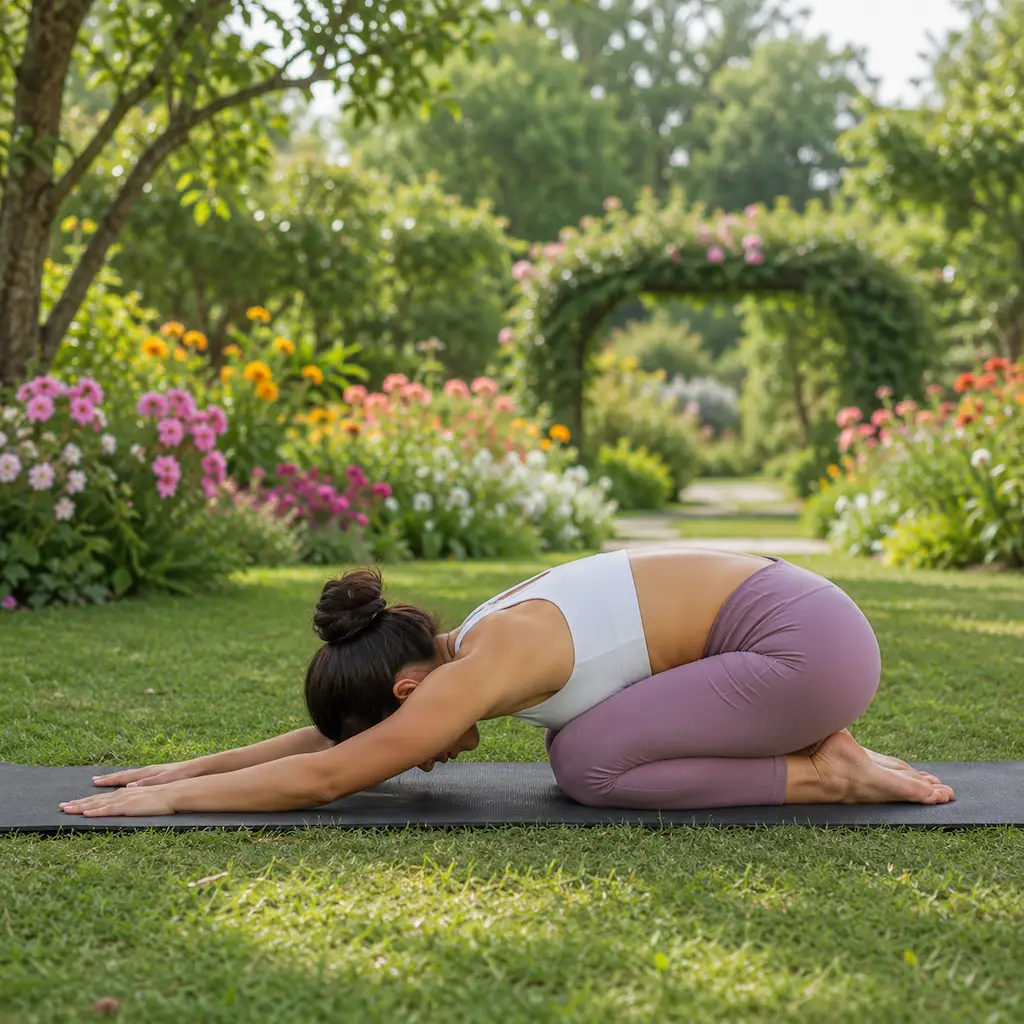
When you calculate the time spent changing clothes, packing accessories, commuting, searching for car parking spaces, and setting up in a crowded group room, a standard 60-minute yoga class requires nearly two full hours of personal scheduling block. For a woman managing systemic fatigue or a busy professional juggling intense responsibilities, this massive time commitment is the primary cause of skipped sessions. Virtual clinical yoga clears out this waste completely. By shrinking your transition down to simply opening a digital video screen in your bedroom, your mind passes from an intense work state into a deeply restorative healing focus within seconds. This immediate access transforms your exercise from a complicated logistical project into an inviting, daily refuge.
Psychological Safety and Vagal Activation
For patients recovering from endocrine conditions, complex hormonal shifts, or stress-related weight plateaus, public spaces can create an unrecognized form of nervous system threat. When you walk into a bright, mirrored commercial studio, your survival centers naturally pay close attention to your surroundings, comparing your flexibility, clothing choices, and body shape against everyone else in the room.
This comparison loop triggers your sympathetic nervous system, shifting your body into a subtle fight-or-flight response. Your heart rate remains slightly fast, your breathing stays in your upper chest, and your pelvic floor muscles hold a tight defensive grip. Our deep observations show that shifting to private home spaces under direct live expert guidance improves Vagal Tone far more rapidly. When your brain recognizes the comfort of your own home, it feels safe to lower its defenses completely. This somatic safety allows your system to drop out of defensive survival mode and slide into the deep parasympathetic state necessary for stabilizing hormone pathways, supporting digestion, and promoting cellular healing.
The Clinical 24-Session Marker
Internal habit audits across our clinical research groups at Banaras Hindu University suggest that patients using virtual precision structures are 40% more likely to reach the essential 24-session milestone without interruption. This continuous consistency is vital; medical tracking reveals that irregular attendance fails to reset old neurological loops. It is the steady, uninterrupted completion of a multi-week somatic protocol that down-regulates high resting cortisol, calms systemic inflammation markers, and allows your internal systems to rebuild their metabolic fire naturally.
Overcoming Screen Fatigue through Somatic Awareness
A common question when choosing virtual health strategies is whether spending more time in front of a digital screen might increase daily mental fatigue and eye strain. While generic, prerecorded online workout videos often cause people to lose focus, an intentional, live clinical class operates in a completely different way.
Our customized virtual protocols use specific tactile and sound tracking cues to pull your attention completely away from the display screen and deep into your own physical sensations. Rather than keeping your eyes glued to a monitor, your guide uses detailed instructions that allow you to follow the sequence with your eyes closed or focused softly on a single point in your room. This method turns your session into an eyes-free, deep meditation that relieves mental exhaustion, helps clear out daily screen strain, balances your nervous system, and provides the exact benefits of an in-person session without any travel hassle.
Our Three Pillars of Digital Somatic Calibration
To bridge the distance between digital technology and classical therapeutic precision, our online program relies on three structural principles that guarantee safety and long-term habits:
-
1
Real-Time Video Alignment Tracking: Your specialist monitors your alignment through an interactive camera setup, offering immediate verbal adjustments on posture, joint angles, and breathing speeds to keep your home practice fully safe.
-
2
Household Prop Integration: We show you how to use common items like firm bed pillows, folded cotton sheets, and wall spaces as clinical props, allowing you to match professional therapeutic setups without buying expensive studio gear.
-
3
Internal Proprioceptive Focus: By training your mind to feel internal muscle shifts, joint angles, and breathing patterns rather than just looking at a screen, your practice builds deep mind-body awareness that melts away day-to-day stress.
The Future of Integrative Medicine
Moving your care protocol to an interactive digital layout allows for true personal customization. In traditional public studio settings, an instructor has to guide an entire room through one generic sequence, regardless of individual health struggles, cycle phases, or daily energy crashes.
Virtual delivery gives you direct access to research-backed health experts, no matter where you live in the world. We can modify your movements in real time based on your immediate health needs, such as adapting your practice for high blood pressure patterns or matching specific phases of your menstrual cycle. When your movement routine adapts directly to your daily life and eliminates travel hassle, consistency becomes effortless. You no longer spend energy trying to fit your life into a rigid studio layout; instead, your therapy steps right into your home, supporting your natural vitality and helping you build lasting strength.
FREE SERVICE
Get Your Free Medical Report Analysis
Stop guessing your recovery path. Click the button below to text our clinical team directly on WhatsApp. Attach your latest ultrasound or lab reports, and get a private, 15-minute clinical evaluation directly from BHU Research Scholar Shringarika Mishra.
UPLOAD YOUR MEDICAL REPORTS NOW
Your Essential Steps for an Effective Home Virtual Practice
1. Calming Your Nervous System with the Cat-Cow Flow (Marjaryasana)
Time to Practice: Move mindfully through this spinal coordination for 5 to 6 minutes at the start of your home practice.
Breathing Rhythm: Maintain smooth nose-only breathing throughout the postures. Inhale for a steady count of 4 seconds as you lift your chest, then exhale for a relaxed count of 4 seconds as you round your spine toward the ceiling.
Step-by-Step Instructions: Come onto your hands and knees on your mat, checking that your shoulders sit directly over your wrists and your hips rest right above your knees. Spread your fingers wide against the floor. As your inhale begins, slowly tilt your pelvis forward, let your belly drop gently toward the mat, and lift your chin to look forward. As you shift into your exhalation, press down firmly through your palms, round your spine upward like a stretching cat, and tuck your chin toward your chest to look comfortably back toward your knees.
Why it works: This rhythmic, low-impact movement gently massages your spinal column and releases physical tension built up from sitting at a desk. It acts as an immediate signal to your brain that you have stepped away from work, helping your mind transition into deep recovery.
2. Left-Nostril Soothing Breathwork (Chandra Bhedana Pranayama)
Time to Practice: 5 to 7 minutes every morning before you eat your breakfast.
Step-by-Step Instructions: Sit up nice and tall in a comfortable cross-legged position on your bed or floor, using a pillow under your seat to keep your spine straight and relaxed. Relax your shoulders down. Rest your left hand on your knee and bring your right hand up to your face. Softly close your eyes. Use your right thumb to gently press and close your right nostril. Inhale slowly, quietly, and deeply through your open left nostril for a silent count of 4 seconds. Then, lift your thumb and use your ring finger to gently close your left nostril, and exhale all the air out smoothly through your right nostril for a silent count of 6 seconds. Continue this pattern: always breathing in through the left, and always breathing out through the right.
Why it works: This specialized breathing style works like an immediate brake for your survival nervous system. It lowers circulating stress hormones, reduces blood pressure variations, and helps open up internal micro-circulation channels that have been narrowed by daily anxiety.
3. Post-Meal Thunderbolt Posture (Vajrasana)
Time to Hold: 5 minutes immediately after finishing your lunch and dinner.
Step-by-Step Instructions: Within 10 minutes of finishing your meal, find a soft surface or mat. Kneel down on both knees. Bring your big toes together behind you so they touch, and separate your heels out wide to the sides, creating a comfortable space to sit your seat down between your feet. Keep your back straight, your chest open, and rest your palms flat on your thighs. Look straight ahead and breathe naturally, allowing your belly to move softly with every breath.
Why it works: Kneeling in Vajrasana alters the blood flow in your lower body, directing a warm wave of circulation away from your legs and straight into your digestive system. This steps up your digestive energy, prevents bloating, and helps your body process and clear out glucose from your food much more effectively.
4. Supported Legs-Up-The-Wall Posture (Viparita Karani)
Time to Hold: 10 minutes every evening when you come home from work or feel tired.
Step-by-Step Instructions: Bring your yoga mat or a blanket right up against an open wall. Sit sideways with your hip touching the wall. In one smooth motion, gently roll your upper body down flat onto your back while swinging your legs straight up the wall. Your body will now look like an L-shape, with your back flat on the floor and your legs resting against the wall. Slide a soft pillow or folded blanket directly under your lower back and hips to keep them slightly elevated. Let your arms relax out to the sides with your palms facing up. Completely relax your thigh muscles.
Why it works: This posture reverses the regular pull of gravity on your lower limbs. It helps stagnant pelvic fluids drain back toward your central circulation, reduces swelling and bloating in your legs and lower abdomen, and tells your nervous system to move into a deep state of restoration and cellular recovery.
Sustaining Life-Long Consistency from Home
Confronting ongoing hurdles with your schedule, skipped practices, and the logistical challenges of driving to commercial spaces is not a personal failure that you have to tolerate. These common difficulties are clear signs that public studio models add unnecessary friction to an already busy lifestyle.
Our customized, interactive online programs at onlineyogaclass.in teach you how to build healthy, stress-free routines right from your own living space. By blending clear, expert video tracking with gentle, low-impact somatic adjustments, you avoid the exhaustion of travel and crowded rooms, keeping your internal pathways open and allowing you to remain grounded, calm, and strong within your home environment.

About Shringarika Mishra
Gold Medalist (University of Patanjali) & NET JRF (AIR 2). Research Scholar at Banaras Hindu University (BHU) specializing in Clinical Yoga and Neuro-Metabolic Integration. With over 11 years of experience and 16 published research papers, she provides evidence-based biological healing through onlineyogaclass.in.
Medical Disclaimer: The clinical records and behavioral data trends shared in this article are meant completely for informational and health-awareness purposes, reflecting observations made within my clinical research frameworks at BHU. This text cannot replace expert medical checkups, official psychiatric support, or primary clinical diagnosis. If you experience severe chronic exhaustion, regular heart flutters, or severe physical pain, please reach out to a licensed medical physician immediately.