Deconstructing the Terms: Inside Your Brain's Chemical Pharmacy
To dismantle the stigma surrounding low moods, we must look directly at the specific neurological switches that balance our emotions. Depression is characterized by a state of physical over-activation inside your brain's threat scanning networks, which directly slows down your higher reasoning centers.
| Neurological Driver |
Its Real Role in Emotional Stabilization |
The True Physiological State in Depression |
| GABA Levels |
The brain's primary calming neurotransmitter, acting as a built-in brake to quiet overactive stress signals. |
Drops significantly, leaving the mind completely exposed to loops of overthinking, anxiety, and deep exhaustion. |
| The Overactive Amygdala |
The automated alarm system responsible for initiating rapid fight, flight, or freeze reflexes across your core. |
Stays permanently turned on, draining your vital energy reserves and making daily tasks feel overwhelming. |
| The Hippocampal Space |
The key brain region responsible for memory retention, clear learning, and structural emotional adaptability. |
Suffers from structural thinning and decreased cell generation due to chronic exposure to high stress hormones. |
When your body is forced to handle continuous lifestyle demands under a heavy load of pressure, your brain can easily interpret the world as an unsafe environment. To preserve your core energy, it switches off your deep motivation and happiness signaling pathways. Forcing yourself to think positively when your biology is stuck in this threat response is highly counterproductive. Our evidence-based methodology uses clinical somatic movement as a direct biological bypass. By introducing targeted physical alignments, we manually change the chemical environment of your nervous system, allowing your brain to restart its internal pharmacy cleanly.
The Neuroscience of the Yoga 'High': Rebuilding Your Neuro-Chemical Baseline
Let us break down the exact biological mechanism that enables precision movement to reconfigure your brain chemistry. During our intensive research work at Sir Sunderlal Hospital (BHU), we observed that individuals navigating chronic low moods display heavily restricted baseline concentrations of GABA. Without this vital neurotransmitter, your brain's alarm centers remain entirely uninhibited, trapping your mind in a persistent loop of emotional exhaustion.
Clinical data proves that precision, breath-synchronized somatic yoga protocols can increase your brain's endogenous GABA production by up to 27% within a single session. This rapid chemical surge works like an immediate calming mechanism across your cortex, gently turning down the over-activation inside your amygdala. By manually applying this physical brake, you stop the steady leak of stress hormones, clear away persistent mental fog, and deliver a fresh wave of vital oxygenation to your reasoning pathways.
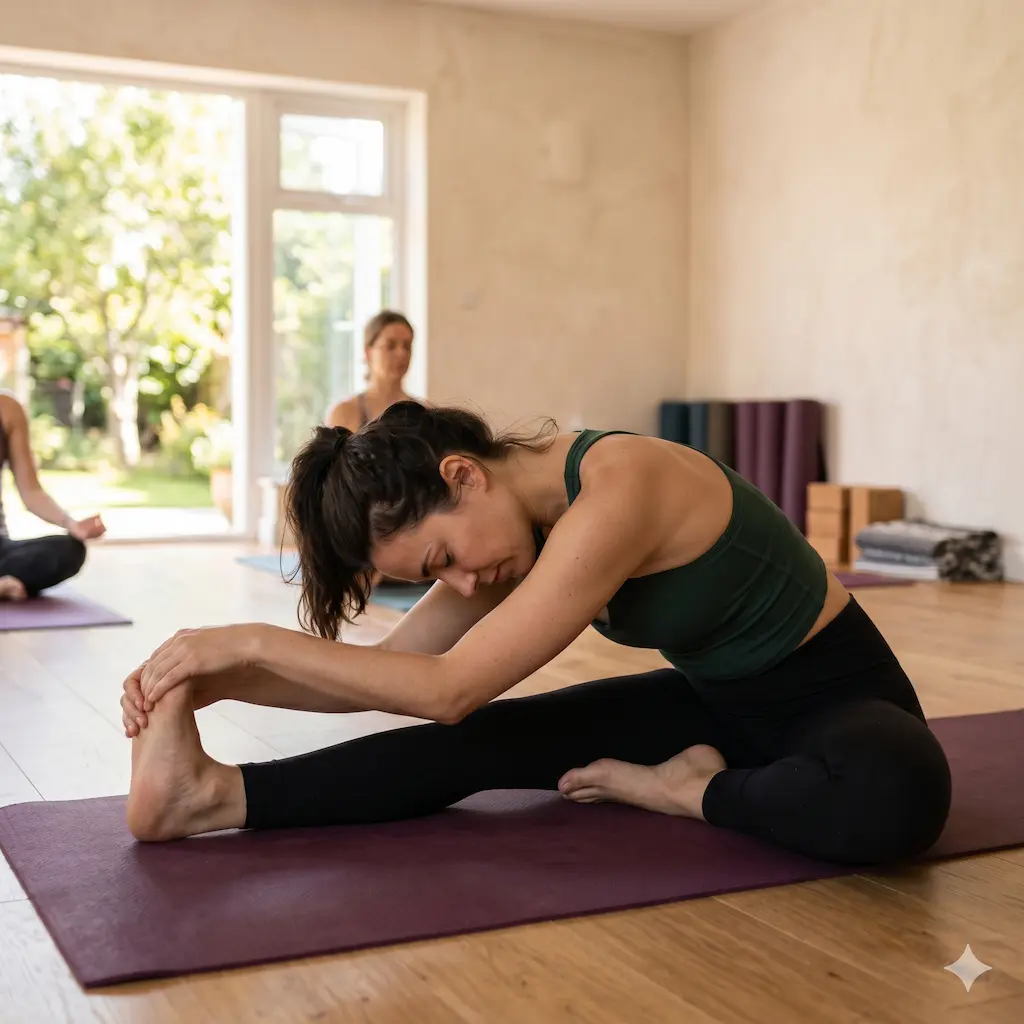
This neuro-chemical restoration provides a stable baseline for long-term neural recovery. When your brain cells are no longer overstimulated by continuous stress loops, they can naturally initiate neuroplasticity—the precise physical process by which your mind builds new, resilient communication tracks away from depressive patterns. By pairing these somatic alignments with calming pranayamas, we improve your heart rate variability, stimulate your master vagal pathway, and encourage your body to release anti-inflammatory cytokines, leaving you feeling profoundly grounded, light, and re-anchored in your natural strength.
The Hippocampal Shielding Reflex
Did you know that prolonged emotional stress can actually alter the physical layout of your memory networks? When your system registers a continuous sense of overwhelm, your adrenal glands produce a steady stream of cortisol. In short bursts, cortisol helps you manage emergencies. However, when cortisol stays elevated for months, it acts like an abrasive chemical wash over your Hippocampus, blocking the creation of fresh neural connections. By practicing supported somatic states like Yoga Nidra, you reduce systemic cortisol production significantly. This creates a neuroprotective environment that shields your DNA from environmental toxins and encourages neural regeneration, essentially helping your brain rebuild its resilience from the inside out.
The Biological Reset Flow: 3 Asanas for Neural Recovery
To counteract the slouched, closed posture structurally associated with low moods and systematically stimulate your calming neuro-circuits, practice this precise clinical sequence daily:
1. Precision Upward-Facing Dog (Urdhva Mukha Svanasana)
Time to Practice: Move through 3 controlled repetitions every morning, holding for 20 seconds each.
Step-by-Step Instructions: Lie completely flat on your stomach on your mat. Place your palms flat on the floor directly alongside your lower ribs, keeping your elbows tucked tightly against your frame. Press the tops of your feet firmly into the ground. As you inhale deeply, straighten your arms smoothly, lifting your entire torso, hips, and upper thighs completely off the floor. Keep your shoulders rolled back away from your ears, lift your chest proudly toward the sky, and maintain a soft, forward gaze. Breathe smoothly into your front body.
Why it works: This alignment directly counteracts the physical chest collapse and slouched spinal patterns caused by low energy. It stretches the intercostal muscles, increases your lung capacity, and provides a direct mechanical signal that improves your heart rate variability and clears structural core tightness.
2. Supported Legs-Up-The-Wall Inversion (Viparita Karani)
Time to Hold: Rest quietly in this position for 10 minutes at the very end of your day.
Step-by-Step Instructions: Position your mat or a folded blanket flat against an open wall space. Sit down sideways with your hip touching the baseboard, and in one smooth motion, lower your upper back flat to the floor while swinging your legs straight up the wall. Slide a soft pillow or folded blanket directly underneath your lower back and pelvis to keep them comfortably elevated. Let your arms rest wide away from your sides with your palms turned up toward the ceiling, and completely let go of all muscular effort in your limbs.
Why it works: This gentle inversion reverses the regular pull of gravity on your circulatory system. It assists tired blood in returning easily toward your upper torso, optimizes vascular perfusion to your brain tissues, and stimulates the pituitary gland to help restore balanced hormonal production.
3. Calming Bee Breathwork (Bhramari Pranayama)
Time to Practice: Perform 7 continuous breath cycles every evening before your dinner hour.
Step-by-Step Instructions: Sit up tall and comfortable in a cross-legged position, using a cushion under your hips to keep your spine naturally straight. Close your eyes softly. Lift your elbows out to the sides, and use your index fingers to gently press and close the small cartilage flaps of your ears, blocking out external sounds. Take a slow, quiet, deep inhalation through both nostrils. As you exhale smoothly, close your lips and create a steady, low-pitched humming sound—like a buzzing bee—deep within your throat. Focus your full attention on the physical vibration bouncing across your skull.
Why it works: The specific acoustic vibration generated during Bhramari works like a direct mechanical soothing mechanism for your central nervous system. It stimulates your vagal pathways immediately, lowers your heart rate, and prevents sudden cortisol spikes to quiet an overactive mind.
FREE SERVICE
Get a Free Clinical Stress & Mood Evaluation
Stop letting emotional fatigue stall your vitality. Click below to message our care team directly on WhatsApp. Share your recent sleep struggles, energy patterns, or health history, and receive a private 15-minute diagnostic evaluation directly from BHU Research Scholar Shringarika Mishra.
CLAIM YOUR FREE EVALUATION NOW
Holistic Integration with Ayurveda: Reclaiming Your Mental Sattva
Following the precise physiological principles we implement inside our clinical batches, true neurological recovery cannot focus on the skeletal structure alone. We must address the fundamental Sattva—the intrinsic clarity, lightness, and purity of your deeper mind. When your system is dealing with persistent emotional fatigue, your Prana Vayu (the master downward and forward vital air current) becomes scattered and weak.
To stabilize this energetic highway, we combine somatic movement with direct nutritional support. We recommend incorporating unrefined, magnesium-dense whole foods into your meals to naturally soothe muscle fibers, alongside targeted adaptogenic herbal supports like Ashwagandha to assist your adrenal glands in managing emotional stress. By clearing metabolic toxins and aligning your daily sleep routine with natural circadian light changes, you remove the physical blocks that prevent your cells from absorbing joy, keeping your energy anchored and secure.
Why Professional Somatic Guidance Restores Lasting Vitality
Living with a continuous state of low emotional energy, handling persistent morning brain fog, struggling to maintain daily professional focus, or dealing with heavy abdominal bloating is not a personal weakness you simply have to tolerate. These chronic signs are your body's clear physical language showing that its internal circulation networks are operating under too much baseline pressure.
Our specialized care batch programs at onlineyogaclass.in teach you how to decode your body's true biological indicators and remove hidden blockages safely. By moving completely away from aggressive fitness routines and adopting mindful, low-impact habits, you avoid placing extra stress on your nervous system. This holistic approach ensures your internal pathways stay entirely open, leaving you feeling calm, light, and completely anchored in your natural strength.

About Shringarika Mishra
Gold Medalist (University of Patanjali) & NET JRF (AIR 2). Research Scholar at Banaras Hindu University (BHU) specializing in Clinical Yoga and Neuro-Metabolic Integration. With over 11 years of experience and 16 published research papers, she provides evidence-based biological healing through onlineyogaclass.in.
Medical Disclaimer: The clinical insights and research-based observations shared in this article are intended entirely for general educational and health awareness purposes, drawing upon baseline neurobiological pathways evaluated during my clinical research work at BHU. This content can never replace professional medical diagnosis, laboratory metabolic screening, or specialized psychiatric oversight. Always consult with your physician before beginning any new clinical yoga protocol.